
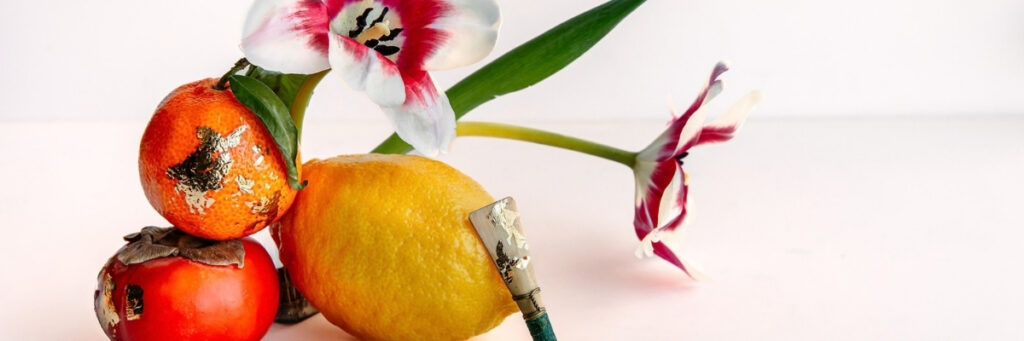
Baroque Fiesta
Cecilia Duarte, mezzo-soprano
Tafelmusik Baroque Orchestra
Directed by Lina Tur Bonet
Performances:
October 29–Nov 1, 2026 at Jeanne Lamon Hall, Trinity-St. Paul’s Centre
Program
Juan Bautista Cabanilles
1644–1712
José de Nebra
1702–1768
Corrente Italiana, arranged for orchestra by Dominic Teresi
Aria “Más fácil será al viento” from Amor aumenta el valor
Andrea Falconiero
1586–1656
Antonio Vivaldi
1678–1741
Folias hecha para mi Señora Doña Tarolilla de Carallenos
Aria “Cum dederit” from Nisi Dominus, RV 608
Aria “Veni, veni me sequere” from Juditha Triumphans, RV 644
Charles Avison
1709–1770
Concerto no. 5 in D Minor after Scarlatti
Largo – Allegro – Andante moderato – Allegro
J. de Nebra
Aria “Se ve uno y otro amante” from Donde hay violencia, no hay culpa
INTERMISSION
Joan Baptista Pla
c.1720–1773
Concerto for oboe in G Major
Allegro spiritoso – Adagio – Allegretto
Daniel Ramírez Escudero, oboe soloist
Fray Antonio Martín y Coll
1650–1734
Sebastián Durón
1660–1716
Chacona from Flores de Musica: Works and verses by various organists, arranged for orchestra by Dominic Teresi
Vaya pues rompiendo el ayre (Solo de Navidad)
Improvised
José Marín
c.1619–1699
Fandango
Ojos, pues me desdeñáis
Rafael Antonio Castellanos
Oygan una Xacarilla
A. Falconiero
La suave melodía
Anonymous
Lanchas para bailar & Song “Cachua la serranita” from Codex Martínez Compañón, arranged by Jussif Barakat Martínez
Program Notes
By Michael Unterman
I’m a fan of layered foods: your bean dips, lasagnas, and—obviously—cakes. I’m also a fan of the gentle sneak attack: that thing that can happen when you’re eating a piece of lasagna and suddenly tears are streaming down your face and you’re not entirely sure why, but that lasagna had something to do with it.
This program may fall into both categories. On its surface—the figurative scallions, cheese, or icing—this program is comprised of party music; you could imagine it as a series of festive snapshots from 1650–1800 or so. If you dig a little deeper, though, there’s a subplot, of creativity and culture subverting politics and subjugation, and perhaps even carrying the day.
To be more specific, in this program all roads lead to Madrid. Spain ruled over most of Italy for much of the 16th and 17th centuries and continued to exert more limited influence well into the 19th. The selections on this program from the New World also proceed from Spanish colonial territories. Thus, whether it’s by the Neapolitan Andrea Falconieri or from the remote reaches of northern Peru, all the music on this program was composed under (or within spitting distance) of the Spanish empire.
At the same time, none of this music can be said to be purely Spanish. There are works by Spanish composers in the Italian style and by Italian composers in the Spanish. We have works from regions that resisted Spanish rule, and in the case of the music from the New World, works in a Spanish style so thoroughly transformed as to be recognizable only as something completely new.
Fittingly, then, we begin with Juan Cabanilles’ Corrente Italiana, which starts out sounding neither Italian nor at all like a corrente, but more like a French overture! When it does break into the expected triple metre, it remains in a grey area between the stately French courante and its fleeter Italian counterpart. Only in the third and final section do we finally arrive in Italy, in the lilt of the melancholy siciliana. All of this tracks with what we know about Cabanilles, a respected organist rooted in the distinct culture of Valencia, who was both sought after as a performer in France to the north and deeply influenced by composers of the Neapolitan school across the Mediterranean to the east.
Out of this richly coloured opener, our mezzo-soprano soloist bursts onto the scene, appearing to us as King Porsenna, the Etruscan antagonist laying siege to Rome and threatening its newly formed Republic. The commission of Amor aumenta el valor must have been an auspicious moment for the young phenom José de Nebra who, at its premiere, would have just turned 26. It was written to celebrate the marriage of the Spanish prince Fernando of Bourbon (later Ferdinand VI) to the Portuguese princess Maria Bárbara de Braganza, a planned union that would ensure peace and stability on the Iberian peninsula. The opera commission was shared between three composers—the Italian émigrés Giacomo Facco and Filipo Falconi, alongside de Nebra—each composing one act, setting a libretto in Spanish by José de Cañizares. Alas, only the music of de Nebra’s Act I survives.
The rarity of Spanish opera from this time isn’t so much due to a lack of sung dramas, but rather that the zarzuela, which, like the German Singspiel employs spoken text instead of sung recitative, was far more popular. De Nebra’s aria “Se ve un otro amante,” which closes the first half, comes from just such a drama, a retelling of the Lucretia story. Unlike his earlier royal commission, this was written for the public theatre and it shows in this extended show-stopper sung by Lucretia’s sassy street-smart maid Laureta, the sort of role that would likely have received far less air time in a drama written for the aristocracy.
The rest of the first half’s music comes to us via Italian composers variously enmeshed in Spanish culture. Andrea Falconieri is the earliest composer on our program, active in the early 17th century and therefore living fully under Spanish rule in Italy. Of the sketchy details we know of his life he seems to have been a free spirit, an itinerant bouncing between various posts in Parma, Mantua, Florence, and Rome, appearing to settle down in Modena, then leaving soon after to crisscross Spain and France. Upon his return to Italy, one of his posts was as a music teacher at the convent of Santa Brigida, in Genoa, where he was denounced by the mother superior for “distracting the nuns with his music.” Now I’m no nun, but I find his music very distracting too, especially this flashy set of folia variations dedicated to one of the patrons he encountered in Spain.
Speaking of blending the sacred and secular, it might be worth calling out that we’re probably most accustomed to the example of J.S. Bach, who is almost always conveying a spiritual message, even in his secular music. For Vivaldi, the inverse—an embedded secular accessibility within the sacred—is often the case, and it makes good sense given the public spectacle and air of mystery surrounding the performances at the Ospedale de la Pietà in Venice. Thus, we get the folk siciliana rhythm in our selection from his Nisi Dominis, and in his oratorio Juditha Triomfans we find this aria with obbligato chalumeau, an early clarinet and a sound we’re not so accustomed to hearing in church music.
To blur artistic and cultural borders even further, Domenico Scarlatti, born in Naples, may have been Spain’s most famous composer. It was actually the very same royal wedding for which de Nebra composed Amor aumenta el valor that led to Scarlatti’s emigration, as he happened to be the harpsichord teacher of the bride, and so followed his Portuguese patron to the Spanish court. Scarlatti’s fame would eventually extend across Europe to England, where Charles Avison would arrange several of his 555 single-movement keyboard sonatas for orchestra, in this case sonatas 11, 41, and 5 (in that order) introduced by his own original opening movement built on a textured ostinato.
As our second half carries us towards the new world, we are fittingly ushered in that direction by a series of wanderers and runaways. The first two works come to us from Catalunya, a region that enjoyed relative cultural and political autonomy in the 17th century, but after backing the losing side in the War of Spanish Succession suffered severe repression of its culture and language.
Given the region’s long history of coblas, folk double-reed bands, it’s no surprise that it gave rise to the superstar oboist and bassoonist Joan Baptista Pla. He worked variously in Madrid, Lisbon, Paris, London, and Stuttgart, mostly in court positions and mostly in the company of his younger brother Josep, also a brilliant oboist. The two were so close it’s hard to tell their compositions apart, usually signed simply Sigr Pla, and they appear to have co-composed as well, signing Sigrs. Everything about this piece confirms what was written about the brothers’ fine musicianship and collaborative spirit, a warmly congenial character, the spotlight passing seamlessly between the soloist and ensemble, and an overriding elegance that artfully obscures the virtuosity required of the solo oboist.
This program’s chacona (there should always be at least one) is an anonymous example put to paper by the Catalan organist and composer Antonio Martín y Coll (and it is thought by some to be his own composition). Arranged here for orchestra, it’s a fitting preview to our music from the New World as the latest research suggests that the chacona originated in Mexico. In its original form it was lively, flirtatious, even sultry, so much so that the Spanish monarchy attempted to ban it in 1615 for its lasciviousness, although its popularity persisted, as we can see by this example penned for organ 100 years later by Martín y Coll, a monk.
Our next two songs come from quite a pair, both rising to the heights of their profession before running afoul of the law and into exile. Sebastián Durón rose to the position of royal maestro de capilla in Madrid while also becoming a renowned theatre composer. Alas, he too supported the losing side in the War of Spanish Succession and so had to flee to southern France where he remained in the service of his patron Mariana of Neuberg, the widow of Charles II, the last Habsburg king of Spain. Vaya pues rompiendo el ayre is an apt selection for a composer known for both his theatre and church music: a jácara, a song in a popular style with energetic syncopated guitar accompaniment, here on a religious theme celebrating the birth of Christ.
This will bring us to the breathtaking Ojos, pues me desdeñáis by José Marín, a song that tugs hard at the heartstrings. Add to it the story of Marín himself (writers of historical fiction take note): a renowned tenor of the royal chapel; ordained by the church; he travels to the New World; upon his return, becomes a highway robber; is caught and convicted of robbery, forgery, and murder, and is clamped in 150 pounds of irons in the tallest tower of Madrid’s prison (where he’s compared in pamphlets to a caged songbird); he escapes and flees; then returns years later, repents and renounces his rough and rowdy past, and is regranted his ecclesiastical orders; he lives to be 80; and at his death is remembered simply as a renowned composer and performer.
At last we arrive in earnest to the New World with another jácara, this one also on a biblical theme referencing the child Mary and her mother St. Anne, composed by the Guatemalan Rafael Antonio Castellanos. The Spanish origins are felt, the similarity to Durón’s jácara is there, but it feels and tastes different, trading syncopated energy for a gliding sensuousness and requiring an infusion of metaphorical chocolate and chilis of its performers for the piece to come off the page.
Our old friend Falconieri returns to show his sensitive side—an instrumental response to José Marín’s tear-jerker perhaps—to carry us, at last, to Peru. It is hard to over-state the importance of the source these pieces come from, the Codex Martínez Compañón, also known as the Trujillo Manuscript. Created over three years, from 1782–85, it is comprised of nine volumes containing detailed descriptions of the local populations, customs, and daily life, illustrated in over 1,400 watercolours and 20 musical scores. Many of these illustrations show how the music was played and for what kinds of occasions: for instance, a harp is plucked while another musician drums on its body, and dancers are shown in ornate costumes with masks depicting various beasts and devilish figures.
One of my hopes for the historical performance field writ large is that we come to talk about the Latin American style, with its clear influences from Indigenous and African music, as a peer to the Italian and French. In my experience, and to my ears, it is wholly different from the blended styles we see in Germany, Spain, and elsewhere in Europe; rather it is something distinctive and new, reverberating from its origins all the way to Bad Bunny and beyond.
If this music could all conceptually be heard in a celebration or party of some sort, for me that fiesta celebrates resilience of art, music, culture, and cultures, which have always had the uncanny ability to slip through the fingers of those seeking to hold them back.
For tickets, visit tafelmusik.org/baroquefiesta
**