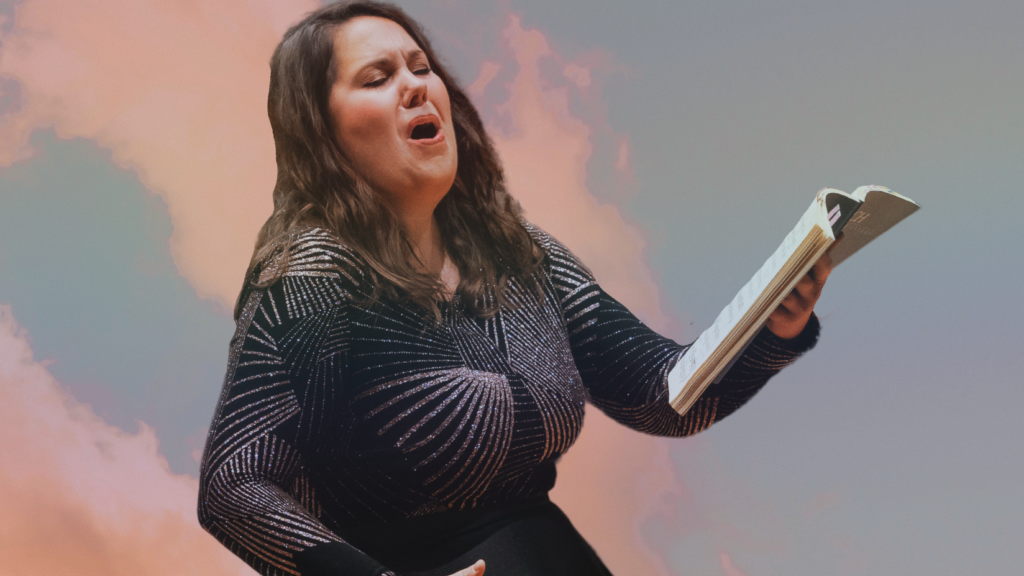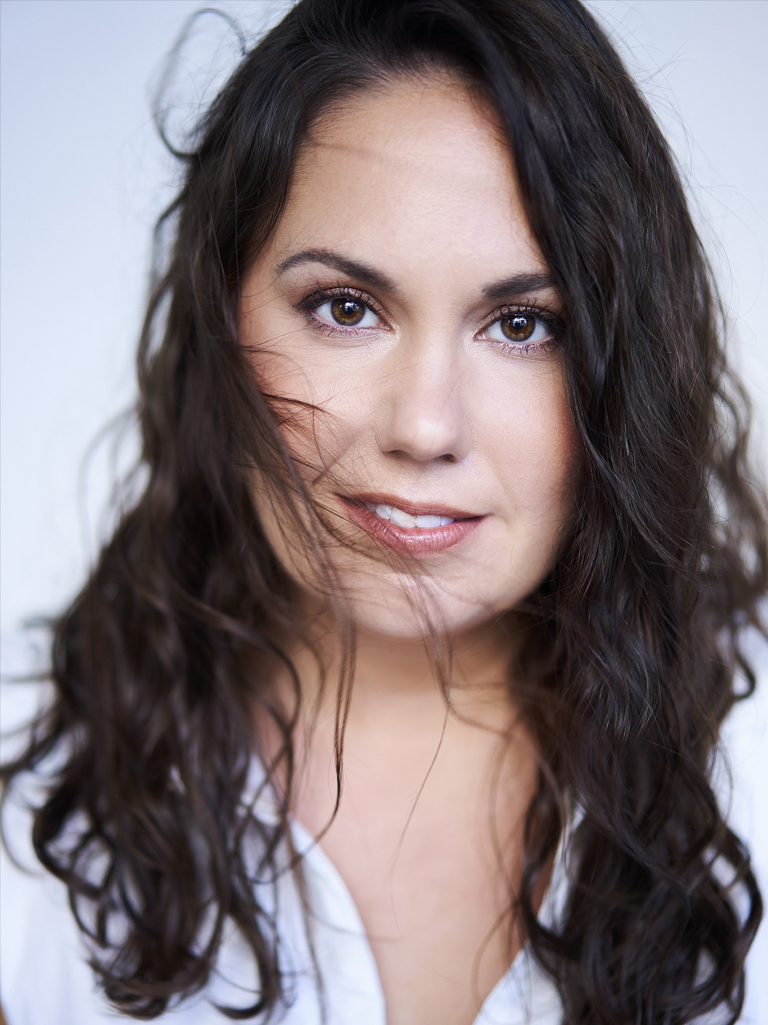
Québecoise soprano Myriam Leblanc has been praised as one of the great sopranos of the moment, thanks to her compelling stage presence and her “supple, intuitively expressive voice” (Opera Canada). A frequent Tafelmusik guest soloist, Myriam joins the choir and orchestra for A Bach Celebration under the direction of Ivars Taurins, March 12 to 15 at Jeanne Lamon Hall.
Myriam is equally at home in the classical, bel canto, and baroque repertoires. Boasting numerous awards, she has appeared with symphony orchestras and opera companies across Canada. She has also performed in concert, most notably with I Musici, Ensemble Caprice, and Les Violons du Roy, and has recorded for the Analekta and ATMA labels.
We caught up with Myriam to chat about her musical formation, her rewarding collaborations with Choir Director Ivars Taurins, and her deep love of the music of J.S. Bach.
Don’t miss this opportunity to catch Myriam live in concert in A Bach Celebration, March 12 to 15.
How did music enter your life and when did you first understand that you had a special talent for singing?
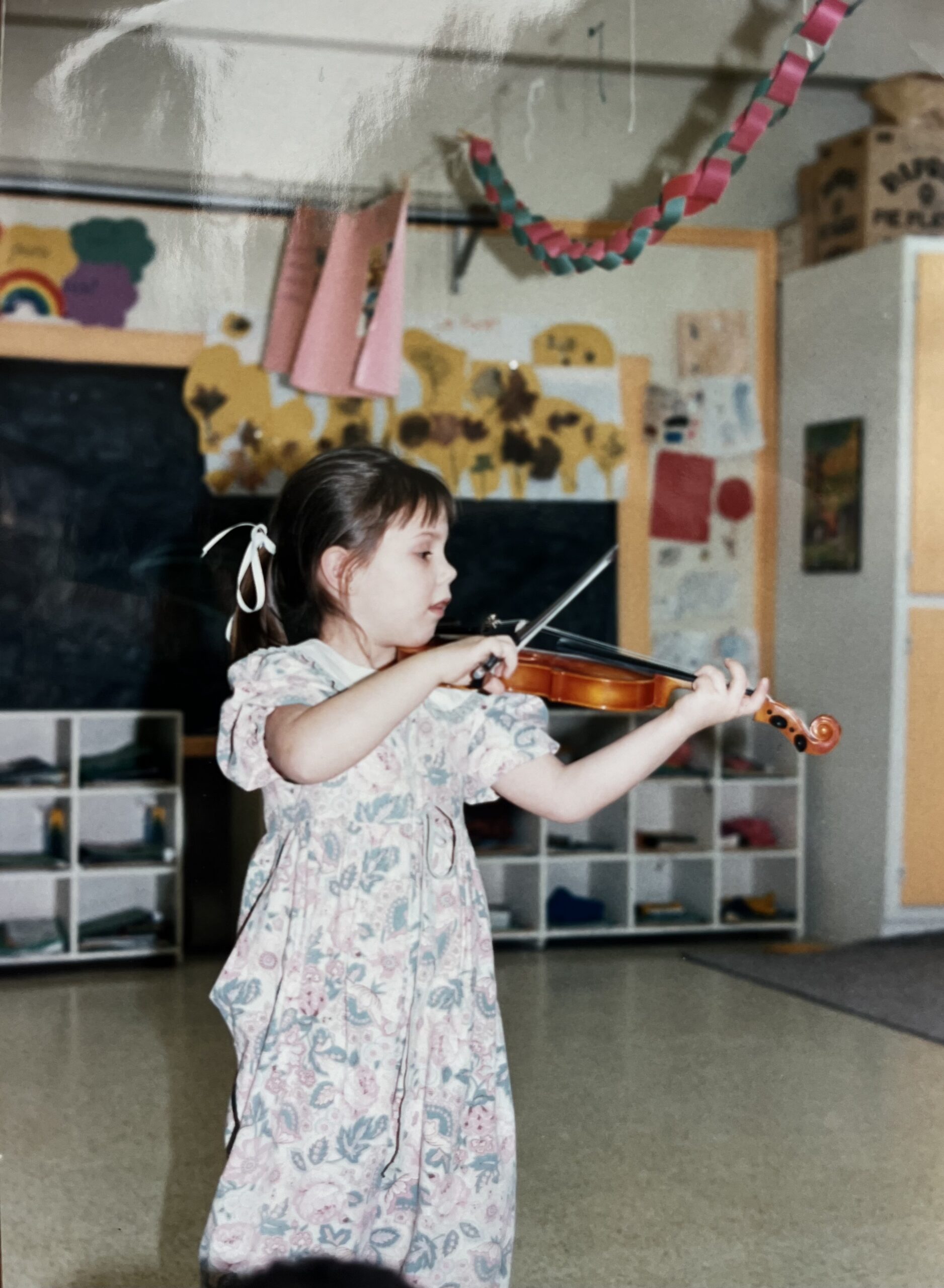
Music came into my life when I was five years old, through the violin. Actually—no! It came even earlier, while I was still in my mother’s womb, as my three siblings all played the piano. I come from a family that loves music of all kinds and really knows how to get a party going! My father was also the regular tenor for O Holy Night at our church’s Christmas Eve service, and that’s where I discovered my love of singing. But only for fun! I never, in a million years, would have believed it could become my career.
It was around the age of 14, at Father Lindsay’s music camp for young musicians, that my voice was first truly recognized. The teacher who introduced us to opera, Marie-Annick Béliveau, was teaching us La Bohème by Puccini. She handed out the children’s chorus scores, and everyone began sight-reading. A voice behind me said, “You really have a special talent. You should sing.” I replied, “Oh really? I’d love to. With you? Would you give me lessons?” (I certainly had some nerve!)
I finished that music camp not as a violinist, but as a singer, after winning the camp’s “coup de cœur” award. I would be featured in the final concert and still remember calling my parents: “Mom, Dad, I’m going to be in the concert!” They replied, “Brava, sweetheart!” But I kept my role a surprise from them. I walked on stage without my violin, joyfully singing the famous aria Quando m’en vo—far, far from perfectly, but feeling that I had finally found my instrument.
Do you remember your earliest encounter with the music of J.S. Bach?
I have loved Bach for as long as I can remember and played many of his partitas on the violin when I was around 10 to 12 years old. I now realize that I did not understand his musical language very deeply—only partially. Bach is a monument in the history of music. It takes years to grasp his essence, his genius. Even today, I try to step aside as an interpreter and give him all the space. Everything is already there. All one has to do is serve his music.
How do you prepare to sing something like Bach’s gorgeous aria from Cantata 127, Die Seele ruht in Jesu Händen?
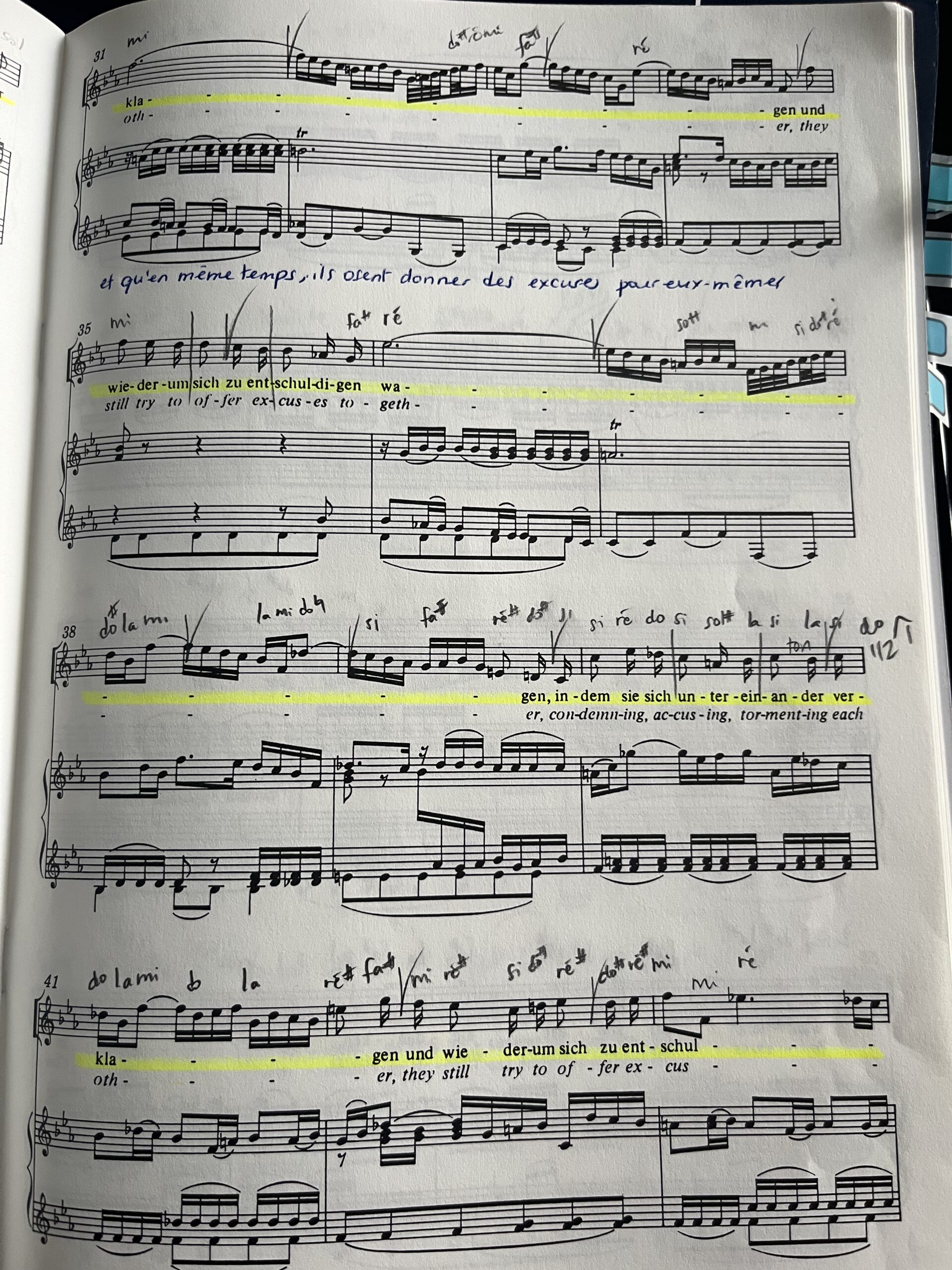
My preparation process usually starts with a translation of the text. I need to understand it in order to communicate it better. Then comes the IPA (the phonetics, not the beer!) so that I can be sure not to butcher such a beautiful language as German. Then, at the piano, I take the piece apart and mark my breaths. I will always remember the famous saying: “No pencil, no career!” Well, take a look at my scores and you will understand that I never go very far without a pencil.
There is one thing you may not know about me yet: I have what is called absolute [perfect] pitch … at 440 Hz. Not at 415 Hz, the pitch at which Bach is often performed. I transpose almost everything by a semitone and write my notes by hand above the “real notes.” Some pieces are easier than others and don’t require this—I can transpose them on sight.
In Die Seele ruht in Jesu, many notes are transposed because the harmony changes frequently and the lines are unpredictable. I prefer to have more preparation rather than not enough. If you knew me well, you would understand that very clearly. More practice rather than not enough—that’s my motto.
As a frequent guest soloist with Tafelmusik, describe what it’s been like to work with Choir Director Ivars Taurins over the years.
I have known Ivars for many years now and have discovered in him a great musician as well as a true friend. Beyond all of that, he is a man with a big heart who lives and experiences music intensely with his whole being. I remember certain rehearsals when I could see that he was so deeply moved by the music that he could not hold back his tears. Ivars serves the music and makes it for the right reasons: to touch hearts, to allow himself to be moved, and to resonate together. And what can I say about his work ethic? If what he hears in his head has not yet been achieved, he will keep working on the sound of the choir, the orchestra, and the soloists to reach another level. With me, he is devoted—always ready to help. It’s a quality in a conductor that, in my eyes, makes him a great one. Attentive, supportive, positive, emotional, sensitive, demanding, and dedicated.
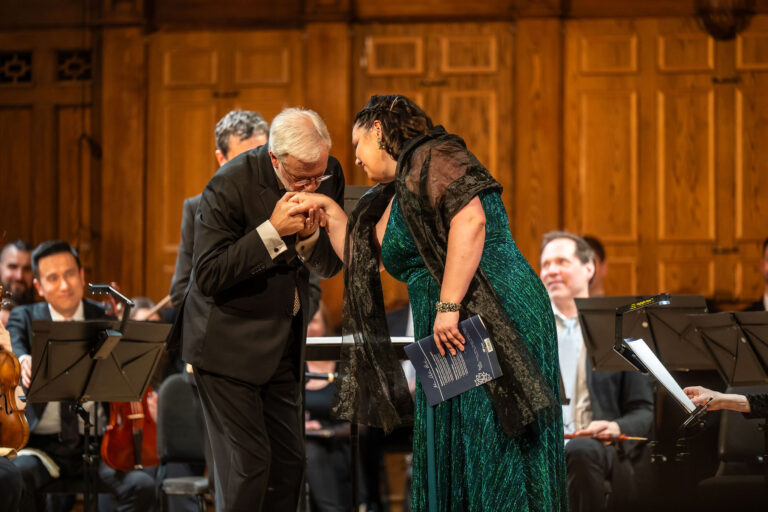
Photo by Dahlia Katz
If you were not a musician, what would you most likely be doing now?
I could see myself directing a company. I have a very analytical, structured, and pragmatic side. I believe I am a natural leader and I enjoy serving and helping others. Perhaps even a position that involves some accounting? I have always liked numbers and their uniquely transparent, clear, and absolute nature. A bit like music, really.
Any upcoming projects that you’re especially excited about?
Yes—very much so! I’m working on many projects, and one in particular is especially close to my heart right now: I am the choir director of the Orchestre symphonique de Trois-Rivières, and I truly love this role. This job is completely different from what I am used to and draws on other sides of me both as a musician and a human being. I love the closeness created through our weekly rehearsals and I love pushing my choristers to be their very best. The voice is an instrument that must be learned and I truly enjoy helping people discover their voices and their full potential. Strangely enough, the advice I give them also feels like reminders for my own technique and helps me in my own singing—a two-for-one!
Another project I absolutely love: a baroque-inspired contemporary opera, Atys by Jonathan Dawe, currently undergoing the writing and revision process with the Opéra de Montréal. I am a real enthusiast of table work—note corrections, rhythmic suggestions, poetry, and so on. It’s work that I take great pleasure in doing. We will present Atys in March 2027. Very exciting!