

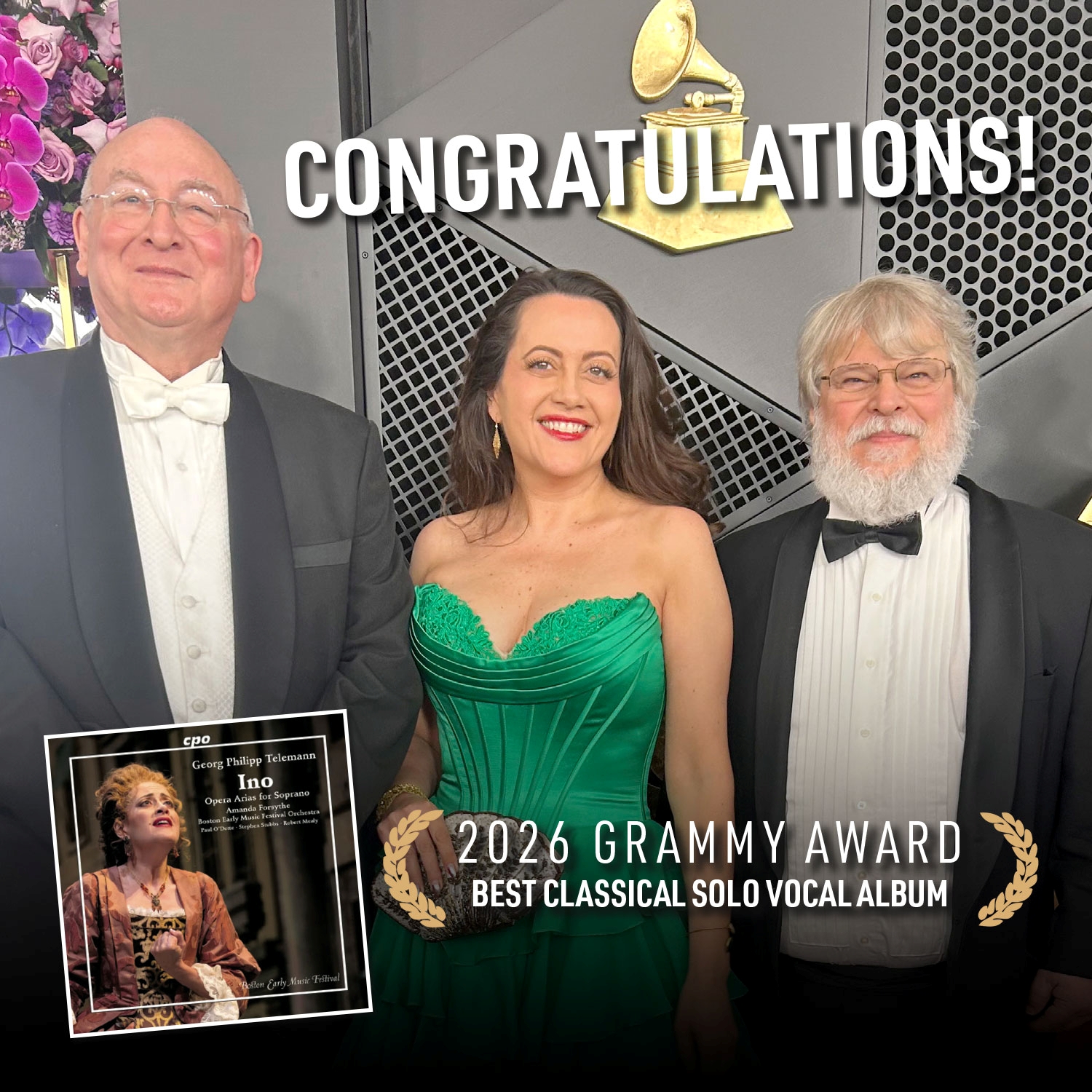
We’re delighted to welcome back American soprano Amanda Forsythe! Fresh off winning a 2026 Grammy Award, Amanda joins us for Hearing Her Voice, a program of striking music by unjustly forgotten women composers, April 30 to May 3.
Warmly praised for her performances on both sides of the Atlantic, Amanda is a regular soloist with many highly acclaimed baroque ensembles. Her extensive discography includes The Power of Love, a solo album of Handel arias with Apollo’s Fire; A Handel Celebration with Tafelmusik; and two GRAMMY-winning recordings with the Boston Early Music Festival: Charpentier’s La descente d’Orphée aus enfers (2015) and Telemann’s Ino and Opera Arias for Soprano (2026).
We caught up with Amanda to chat about Hearing her Voice, a program that includes the world premiere of a new commission by Karen Sunabacka. And of course, we asked about her experience at the GRAMMY Awards a few weeks ago!
How did music enter your life and when did you first understand that you had a special talent for singing?
I was definitely one of those kids who was constantly singing! I started off in choirs, and when I was in high school my choir teacher recommended that I start private voice lessons. I wasn’t really serious about it until I got to college, but even then, I wasn’t fully committed to becoming a singer. I guess I’ve always known that I had a good ear and a pretty sound, and maybe that gave me the confidence to keep working on developing the skills I needed to become a professional.
Congratulations on winning the Grammy Award for Best Classical Solo Vocal Album of 2026! What thoughts went through your mind as you walked up the stairs to the Peacock Theater stage to deliver your acceptance speech?
The Grammys were a WILD experience! I splurged on extra tickets so my partner and kids could attend and I’m so glad that they got to experience that with me. My younger son was so over-excited that I think it forced me to be extra calm, and I’d written a speech just in case, so I was weirdly zen heading up to the stage. By far my favourite thing about that weekend was watching the videos from my friends who were watching online. They were truly joyful when our album won and it made me feel so loved!
Hearing her Voice features striking music by unjustly forgotten women composers. Can you describe what led you to select the arias you’ve included? And how many are works you will be performing for the first time?
Aside from Che si puo fare by Barbara Strozzi, this entire program is new to me. I had been sent some of the arias years ago by the musicologist Dragan Karolic and I was so happy to finally find an occasion to perform them. There is so much more undiscovered music out there. Hopefully our audiences will love what they hear and clamour for more!
One of the highlights of the program is the world premiere of We are leaving, Karen Sunabacka’s commissioned work for soprano and orchestra. Can you tell us a little more about the piece?
Karen’s piece is a beautifully lyric description of an incident that happened to her Métis ancestors when they disobeyed an order that went against their values. The text is written by her mother Joyce Clouston, and intersperses Cree words with English to dramatic effect.

If you were not a musician, what would you most likely be doing now?
Well, until recently, I would have probably said real estate. But I had an epiphany during a Messiah performance last year and decided that when I can’t sing anymore, I’ll become an actress! You can’t age out of acting and I like the idea of staying in a creative, project-based industry.
Any upcoming projects that you’re especially excited about?
Aside from this Tafelmusik program, I’m most excited to revisit Idomeneo in Washington DC in May. I hardly ever get asked to sing Mozart and I really love it, especially the early works. I’m hoping to record a Mozart album next season!
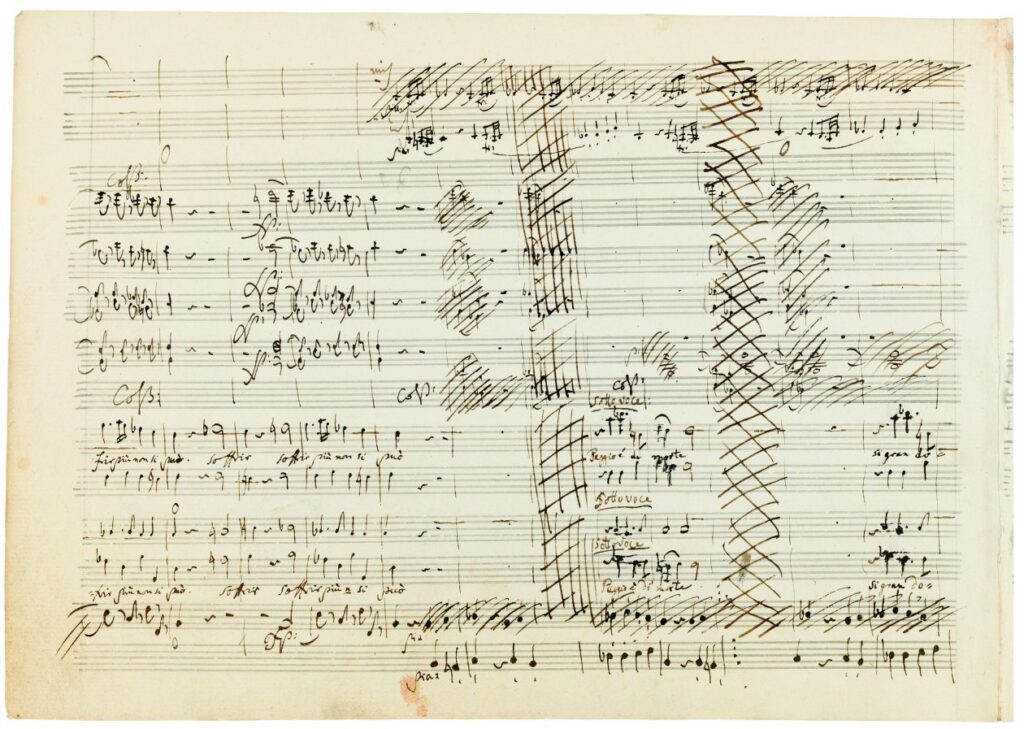
Hearing Her Voice
Returning to Tafelmusik, Grammy award-winning soprano Amanda Forsythe will discover brilliant works by Elisabeth Jacquet de la Guerre, Barbara Strozzi, Mademoiselle Duval, and more in Hearing Her Voice. Don’t miss your chance to hear the newly commissioned work by Métis composer Karen Sunabacka. Buy your tickets today!
April 30 – May 3, 2026
Trinity-St. Paul’s, Jeanne Lamon Hall
