
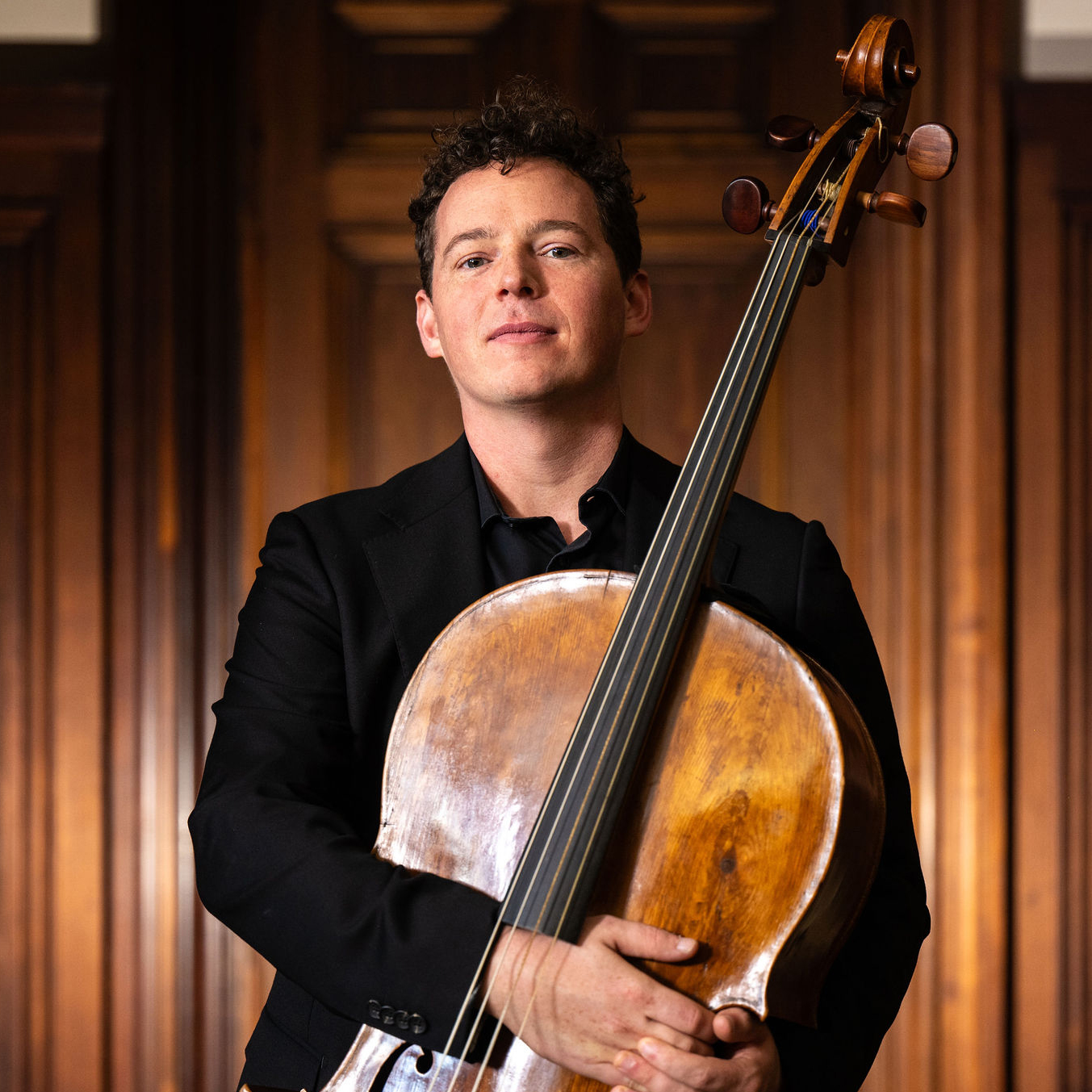
Since joining Tafelmusik in 2019, cellist Keiran Campbell has made his mark, both as a gifted soloist and for his “spectacular contributions” (Toronto Star) as a member of the orchestra’s continuo section.
In our upcoming program, Influencers: the Bachs, Mozart & Haydn, Keiran will be featured as soloist in the mercurial Cello Concerto in A Major by C.P.E. Bach — a showcase that alternates lyricism with virtuosity.
We recently caught up with Keiran, who shared his thoughts about the concerto, as well as the latest additions to his family—instrumental and non!
Don’t miss Keiran in Influencers: the Bachs, Mozart & Haydn, led by Rachel Podger, Principal Guest Director. Performances take place in two GTA venues: George Weston Recital Hall, Meridian Arts Centre on April 9; and Jeanne Lamon Hall, Trinity-St.Paul’s Centre, Toronto, April 10–12.
C.P.E. Bach was a fascinating composer and an important figure in the transition between baroque and galant styles. How would you describe his writing for the cello?
C.P.E.’s writing is really very exciting and somewhat nerve-wracking for the cellist. He is in so many ways a different composer than his father, J.S. Bach. I think his writing reflects the times, when music was shifting towards focusing on the artist expressing themselves personally, rather than being a conduit for music that came down from heaven. The solo part is extremely exploratory, jumping rapidly between nimbly skipping figures and deeply singing phrases. The middle slow movement, which is marked “mesto” (sad, mournful) is one of the most beautiful in our repertoire. The cello sings, almost gasping and wailing in our high register, while the muted strings offer commentary and support. The last movement is pure fun, with lots of figures that feel like musical fireworks!
In many ways this piece reminds me of a later concerto, Robert Schumann’s Cello Concerto in A minor—I think the two would pair well on a recording. Besides having many similar figurations and moods (and being somewhat awkward for the cellist to play!), both works offer a very intimate look into the expressive world of the soloist. You simply cannot play either concerto with a “middle-of-the-road” interpretation.
Tell us about the instrument you’ll be playing at the Influencers concerts and why you chose it for the concerto.
The instrument is a cello that I’ll talk more about in the following question. It is very appropriate for the piece, as it’s on the smaller side (rather than being a big bass violin!) and was made towards the end of the 18th century. By the turn of that century, cellos were gradually becoming smaller so that cellists could scamper around with ease. I’ve only recently started playing on this cello, but it already feels like my voice, and it offers a really interesting and varied colour palette.
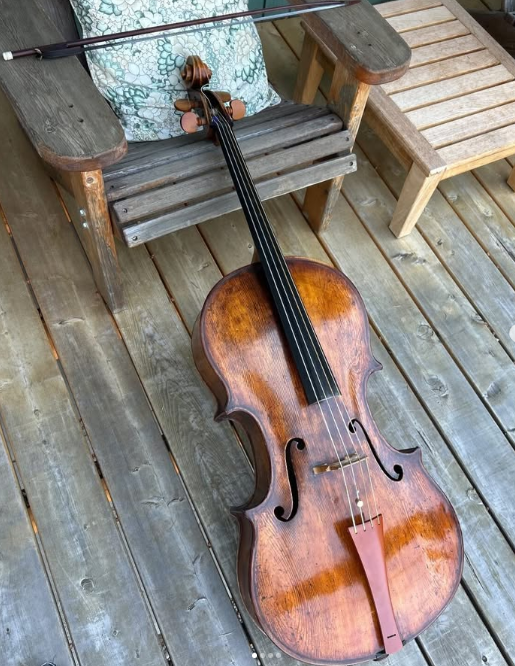
Speaking of instruments, we understand you’ve recently acquired a cello with an impressive historical legacy. Can you tell us a bit about it?
It’s a very interesting instrument and I’m still trying to learn more about it! It was made in the late 18th century in Northern Italy, and up until the late 20th century it was thought to have been made by the 18th-century Genoese maker Paolo Castello. Research on Castello’s instruments has evolved, so experts are now not so sure who actually made it. A few names have been thrown around, but more digging needs to be done!
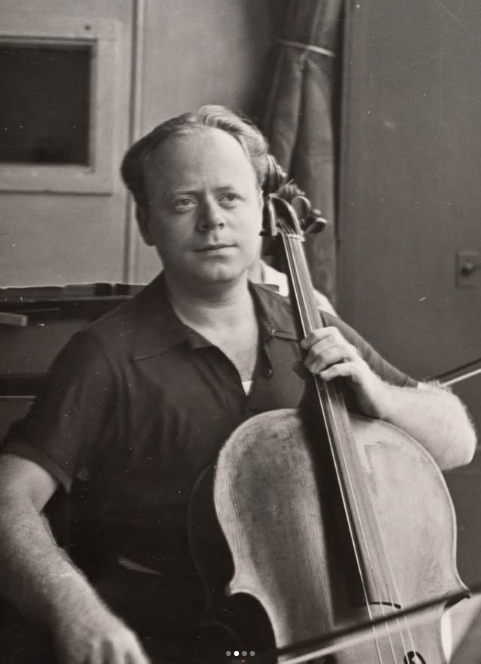
Starting in the early 1900s, the cello was owned by Martin Ormandy, the brother of the famous conductor Eugene Ormandy, who was also a fabulous violinist. Martin grew up in Budapest and became principal cellist of the Budapest Opera at the age of 18. He was set to study cello with the absolutely legendary cellist David Popper (any professional cellist will know his name, mostly for the fiendishly difficult etudes he wrote!). Unfortunately, Popper passed away before classes could start, so instead Ormandy studied with Adolf Schiffer, who taught an incredible generation of cellists, including Janos Starker, Tibor de Machula, Gábor Rejtő, and Laszlo Varga.
The Ormandy brothers moved to New York in the early 1920s and Martin gigged around on the cello and saxophone(!) until 1921, when Arturo Toscanini offered him a position in the New York Philharmonic. He remained there until 1965 and continued playing with many groups in the city right up until his passing at age 95. I feel lucky to play a cello that I love so much, one that has such a deep connection to cello history!
We’ve chatted before about your passion for instrument building. What projects have you been working on most recently?
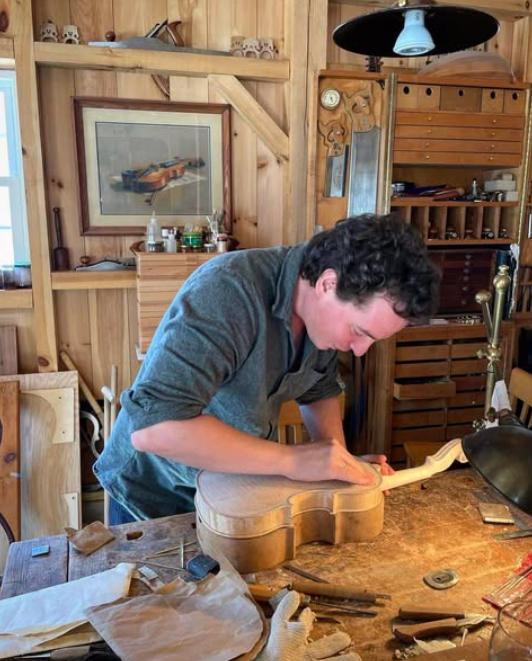
I am just now finishing a viola and a violin, which are part of a quartet commission from a group in Minneapolis. Last year I finished the other violin in the set, so all that’s left to do is varnish this year’s instruments (I wait until the warmer months to varnish, as the oil varnish I use only fully cures when exposed to UV rays). I’ll get started on the cello, which will be my very first! The instruments are in baroque setup and will be used by students who are part of Early Music Minnesota, so I am thrilled to be able to make something that will hopefully help them fall in love with the world of early music!
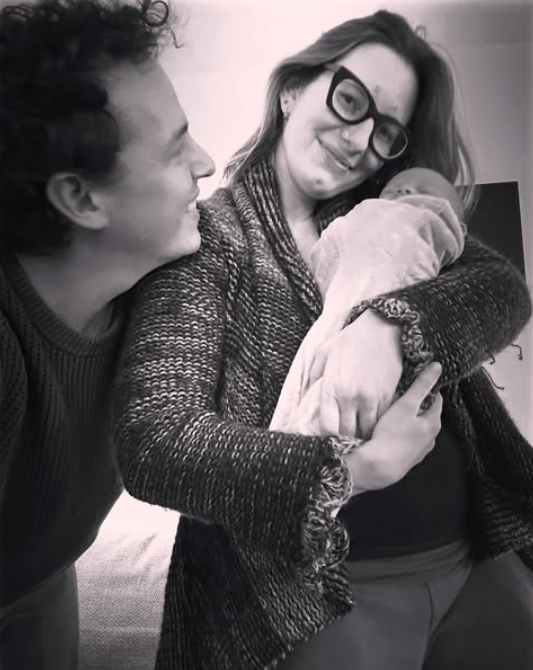
Congratulations to you and your wife, violinist Chloe Fedor, on the recent arrival of your daughter Willow! How do the two of you coordinate your practice schedules around a newborn’s naptimes? Does Willow have a favourite lullaby?
Thank you very much! Luckily, Chloe and I are very used to having to prepare very different projects at the same time (one of us might be playing a modern instrument at A442 and the other a classical instrument at A430). We wait until Willow is asleep and then practise wherever we can! Chloe is in great demand as a violinist, so I have been (selfishly) very happy to have her at home around Toronto more during these past few months.
Chloe sings the lullaby from Peter Pan, which is what her mom used to sing to her. Willow seems to love it! Lately, I have had a Slovakian folk tune that my friend Miloš Valent arranged (some of you will remember him from last season) stuck in my head, so I sing that.
What upcoming project (musical or non) are you most excited about?
I’m excited about lots of musical projects and don’t want to pick a favourite, but the thing I’m most excited about is starting to make a 1/4-sized violin for Willow!