
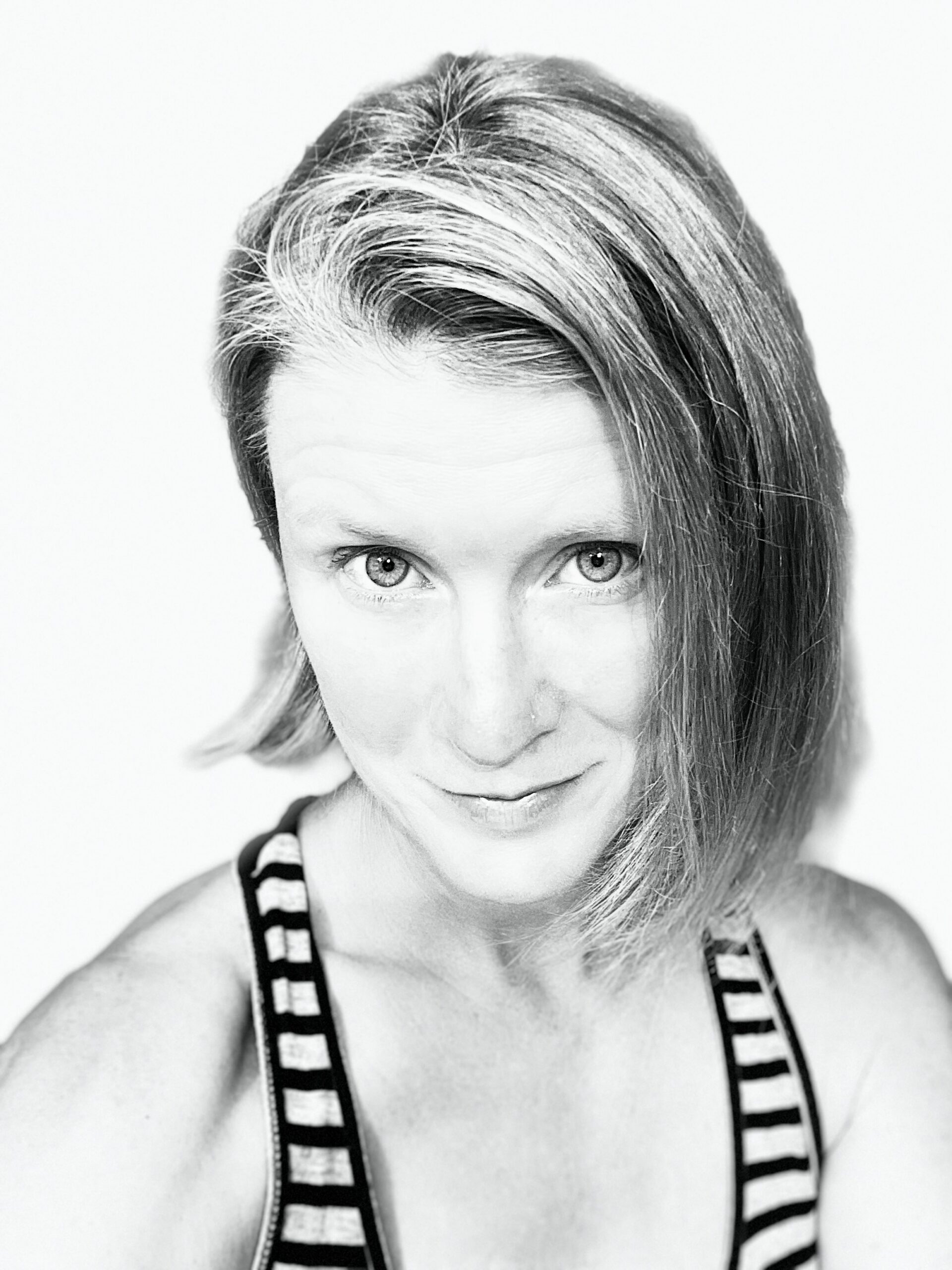
It’s not every day that Tafelmusik gets to collaborate with dancers and we couldn’t be more excited to welcome Caroline Copeland, an embodied dance historian, choreographer, and educator. She will be joining us along with dance partner Julian Donahue for Rameau and The Art of Dance, February 19–22. This richly theatrical program celebrating the bold, kinetic music of Jean-Philippe Rameau features Tafelmusik and period ensemble Juilliard415 under the direction of Robert Mealy.
In the field of early ballet, Caroline has performed in over 70 productions and has 50 choreographic credits in film, opera, theatre, and concert dance. She has worked with prestigious festivals and performing institutions across the US and Europe, including the Grammy-Award winning Boston Early Music Festival and the New York Baroque Dance Company. A guest lecturer for Juilliard’s Historical Performance program, Caroline is currently on the dance faculties of Hofstra University and SUNY Purchase Conservatory of Dance.
Read on to learn more about Caroline’s introduction to historical dance, her creative collaboration with Julian Donahue, and the stylistic intricacies of baroque choreography.
Don’t miss the chance to catch Caroline live in Rameau & the Art of Dance Feb 19 – 22.
How did dance first enter your life and what led you to pursue historical dance specifically?
To quote T Rex (aka Marc Bolan), “I danced myself right out the womb…” My early training was mainly in ballet. I had a fabulous Cuban teacher, Theresa Martinez, and with her encouragement spent summers in New York City at Joffrey Ballet School and School of American Ballet. My first experience with earlier ballet forms was at Goucher College with a dance history scholar, Chrystelle Bond. She introduced me to the concept of combining scholarship with performance, or embodied dance history, and to Catherine Turocy and The New York Baroque Dance Company. Catherine’s workshops were interdisciplinary, involving acting, musicology, mask work, historical fencing, as well as performance and dance notation. Blew my mind! I was hooked.
What are some of the biggest differences between baroque dance and what we might see at the ballet or other dance performances?
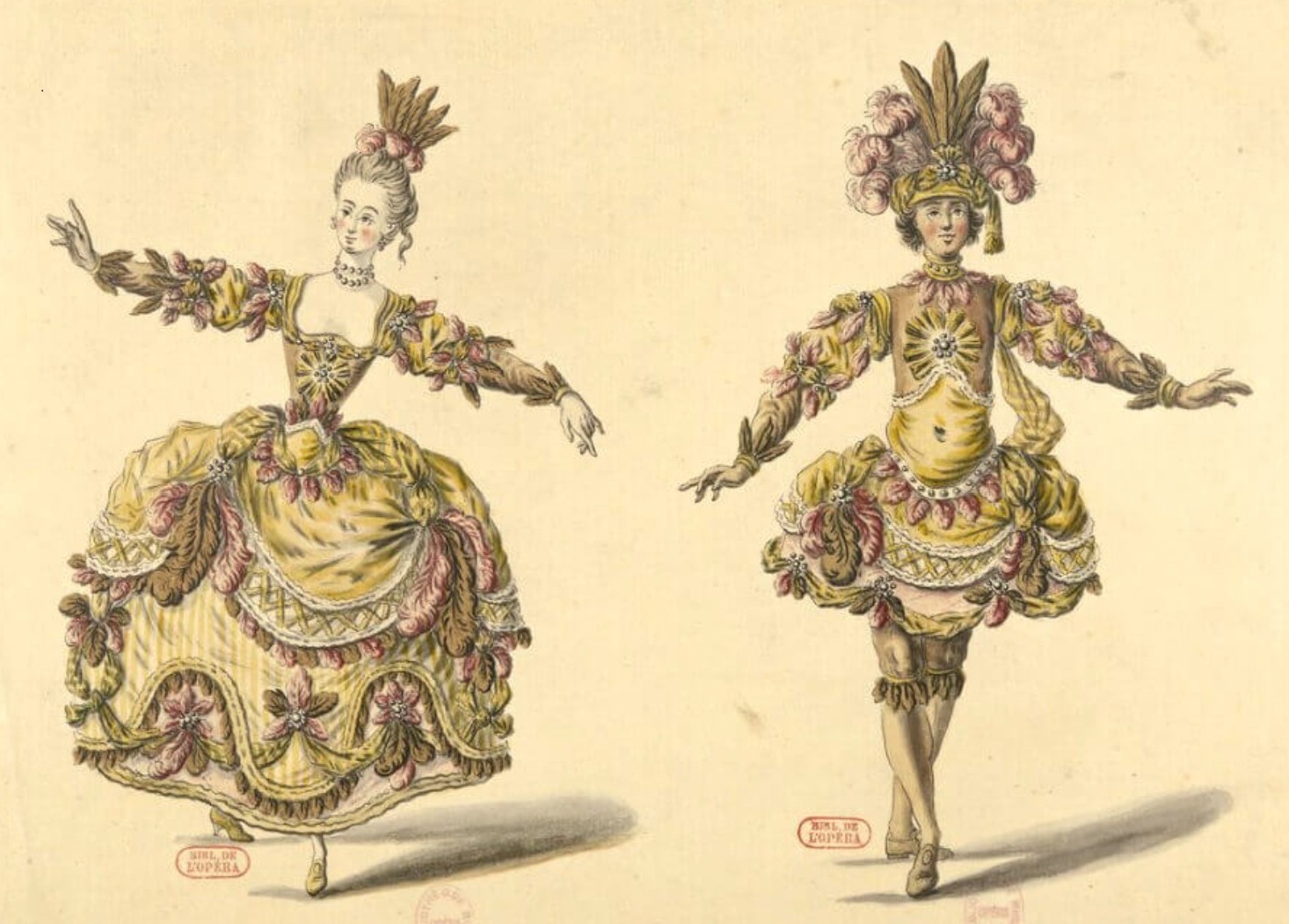
Certain principles of ballet have been with us since the European Renaissance: the importance of musicality, symmetry, proportion, and variety, with an emphasis on control and verticality. One difference between baroque ballet and contemporary dance today is the scale of movement. Early ballet is generally more contained in terms of leg gestures. Comedic and grotesque dancers were an exception, and their dancing could involve inversions, big leaps, and vigorous turns. Another obvious difference is that baroque costuming usually involved weightier clothing—corsets, panniers, petticoats, and overskirts for women and tonnelets for the men (imagine a floppy tutu). Both men and women wore masks at the Paris Opera, along with elaborate headpieces, and they often carried attributes (garlands, snakes, torches, swords) to help the audience decipher their characters.
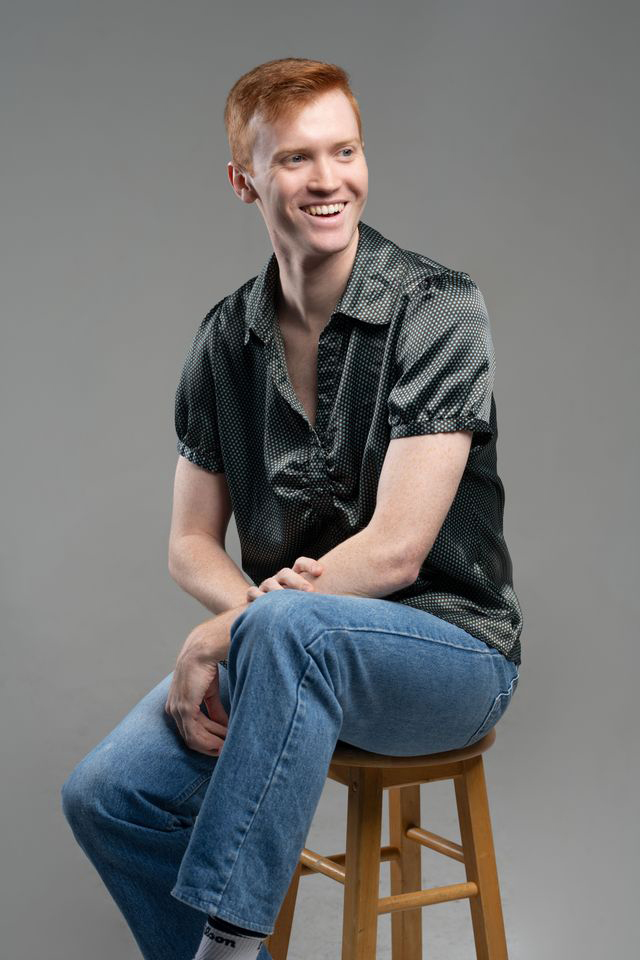
We’re delighted to welcome dancer Julian Donahue, who will be joining you on stage. Tell us what it’s been like to collaborate with Julian.
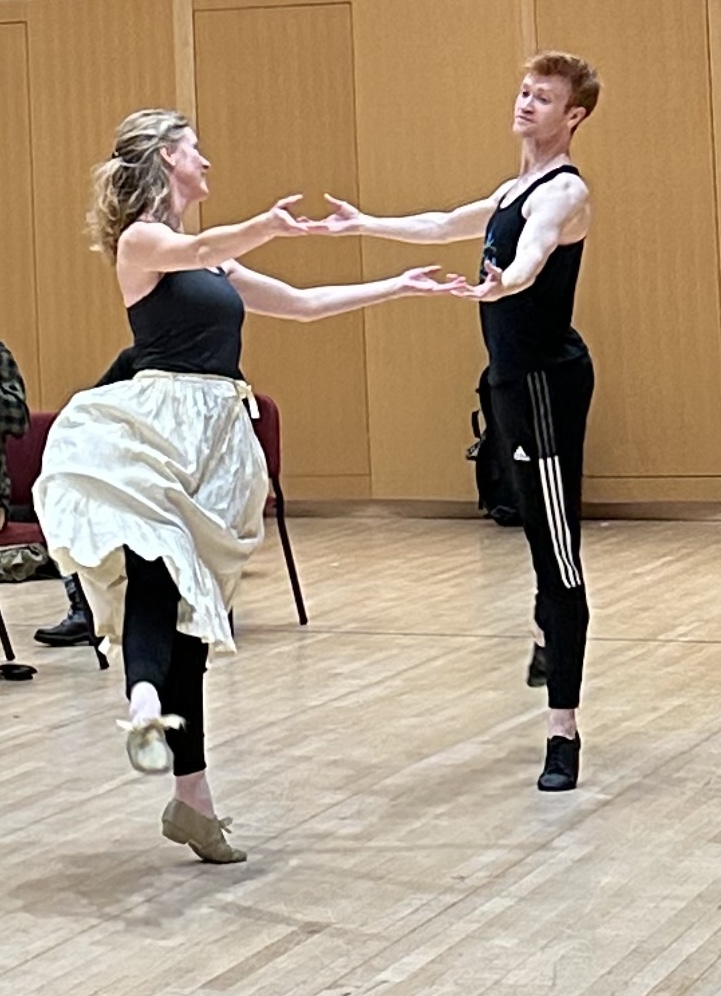
It has been a fascinating process to look at Rameau’s music from different perspectives— the contemporary and baroque— and for stylistic cohesion, we decided that we would each choreograph one suite. Julian is an extraordinary technician who is versatile in many styles of ballet and contemporary/modern dance forms. He has an intellectual curiosity about all things and that is one quality I look for in a dance colleague. Another important quality is humility and a good sense of humour, which I have had to put to good use as his choreography is difficult!
Even though Julian is choosing contemporary movement, he is bringing to the process a foundation of baroque dance vocabulary, rhythms, and musical phrasing. This knowledge is generally missing from other contemporary dance treatments of baroque composers. And he is filtering all that ancient information through a 20th-century lens of ballet and modern dance artists like Enrico Cecchetti, Merce Cunningham, Paul Taylor, and the postmodernists. A real swirl of dance history!
How technically demanding were the dances in Rameau’s operas, and what do we know about the dancers?
The surviving theatrical notations closest to this period illustrate a highly complex system of rhythmic shifts of weight and beaten steps, a lot of jumps like entrechats, cabrioles, and tours en l’air, plus many types of turns and pirouettes. The famous names that come down to us reveal what dance treatises confirm in terms of pedagogy, that unique talents were cultivated in each dancer. Louis Dupré, or the god of dance, was noted for his noble, restrained style of ballet. Barbara Campanini (La Barbarini) and Marie Anne de Cupis de Camargo (La Camargo) were known for their sparkling technique, physical strength, and “petite batterie,” whereas Marie Sallé was known for her expressive dancing.
The complex system of baroque dance notation is a language unto itself! For the dances you and Julian will be performing with Tafelmusik, will you be consulting original archival sources, or is it more about a process of creative reconstruction?
Julian’s choreography for Naïs is an original work, but my choreography for Dardanus relies, in part, on notations. To clarify, every time a dancer brings a notation to life, it is a “creative reconstruction,” and there are no extant dance notations from Rameau’s opera-ballets, so this era is a real blind-spot in terms of choreography.
The ballet music of Rameau signals a change of ballet technique that we have no evidence for, so my approach involved looking backwards and forwards at the same time. For instance, in the Tambourin from the Dardanus suite, I adapted the only surviving notated tambourin from an earlier ballroom choreography, Louis Pécour’s “La Biscayene”(1719), but I also inserted a quote from a later ballroom dance, “Gavotte de Vestris” (1826): a blend of ancien regime mechanics with brisk enlightenment petit allegro. And Rameau’s chaconnes are longer forms than any notated chaconne we have on record. It is impossible to simply transpose one chaconne upon another due to the episodic nature of his compositions. Instead, I utilized quotes from many different notated sarabandes and chaconnes from the first quarter of the 18th century and experimented with a different use of the arms and torso, like we see in the paintings of Camargo, Sallé, and Hardouin.
You’ve conducted dance classes for musicians at Juilliard, Yale, and Rutgers, among others. Why is it important for musicians who specialize in baroque music to have some knowledge of historical dance?
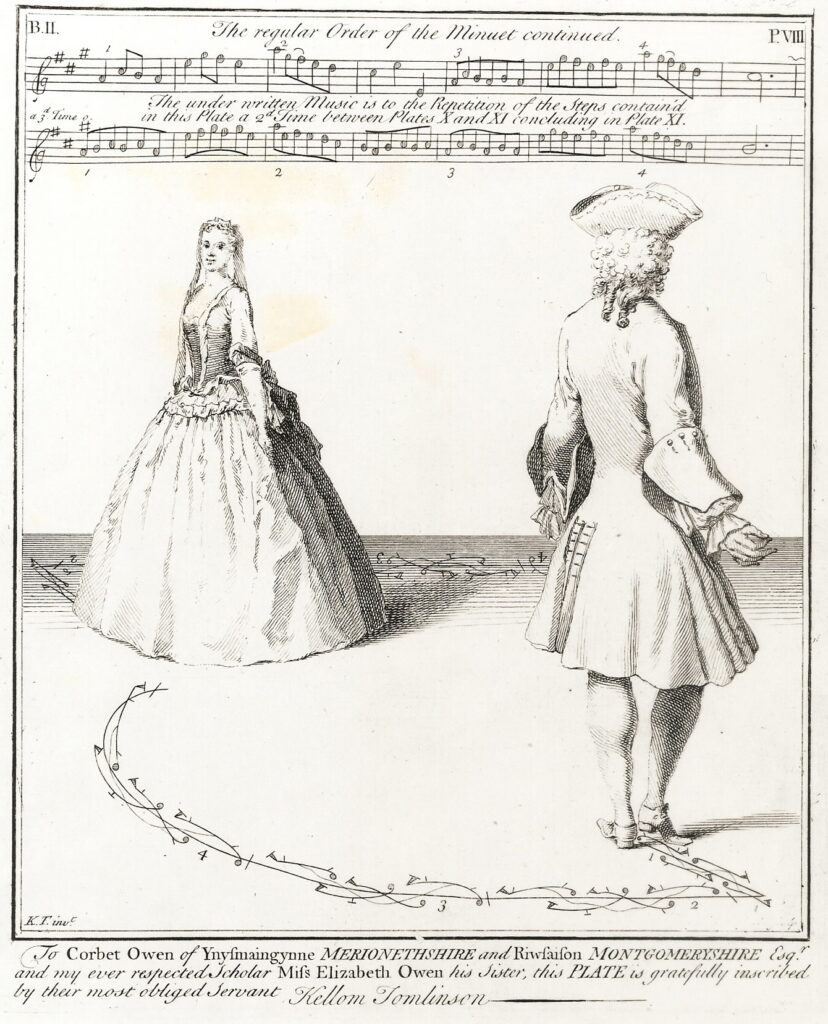
The British dancing master Kellom Tomlinson wrote, “This is the natural Effect of good Dancing… that the Music seems to inspire the Dancing, and the latter the former; and the Concurrence of both is so requisite to charm those who behold them, that each of them in some Measure suffered by a Separation.” (The Art of Dancing Explained, 1735)
I have had the great pleasure to work with fabulous musicians in baroque and modern music, and the best musical accompanists watch the dancers and have some kind of kinesthetic empathy for what we are doing. Most of those musicians have also taken dance classes.
It is not about learning the steps per se, it is about finding the groove or flow of each dance type. Almost all baroque music is based on dance rhythms, so pulse, character, “mouvement” are important concepts to feel in the body, not just for playing the music but also for the joy of listening to the music. I never “felt” anything when I listened to baroque music growing up, but now that I know how to dance to it, it’s like a secret code has been broken and that mysterious blend of form and emotion in the music has been revealed to me. Just sublime.
If you were not a dancer, choreographer, and educator, what would you most likely be doing now?
I cannot even imagine… a historian or a politician?
Any upcoming projects that you’re especially excited about?
In June, I will teach a workshop in Germany at Burg Rothenfels that explores the work of Kellom Tomlinson and the art of the ports de bras, or carriage of the arms. So, I am looking forward to nerding out with my fellow embodied dance historians about nitty-gritty details of technique and the artistry of arms!
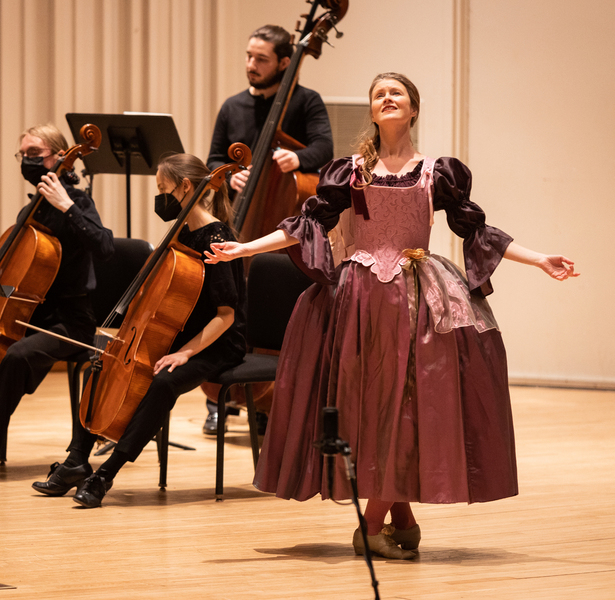
Image: Christopher Kayden
Rameau & the Art of Dance
Experience Tafelmusik and New York’s legendary Juilliard School in this celebration of the theatrical and extraordinary music of Jean-Philippe Rameau. Get your tickets to see Rameau & the Art of Dance now!
Feb 19 – 22, 2026
Jeanne Lamon Hall, Trinity-St. Paul’s Centre
