
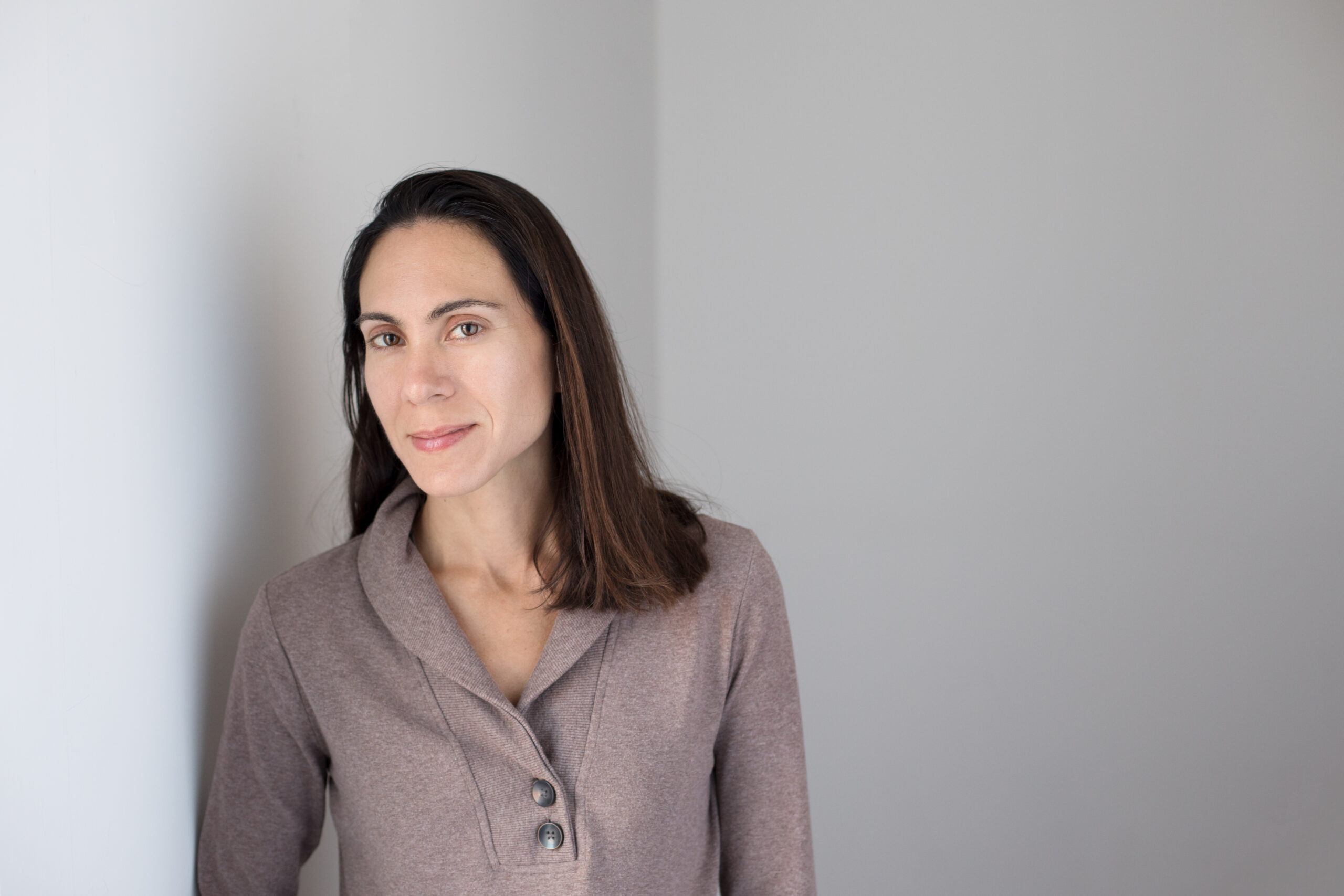
Depending on the repertoire at hand, Tafelmusik occasionally invites extra musicians to augment its core group of orchestra members. One of these is the brilliant Kathryn Montoya, who has joined us for several programs over the years. We’re delighted that she will be “doubling” on oboe and recorder for Bach’s Brandenburgs later this month. “Kathryn is an incredible player and is very knowledgeable!” says Cristina Zacharias, Artistic Co-Director.
Kathryn teaches historical oboes at Oberlin Conservatory and has been on the faculty of Longy’s International Baroque Institute, the Baroque Performance Institute at Oberlin, and San Francisco Early Music Society workshops. Her varied career includes performances with Boston Early Music Festival Orchestra, the Wiener Akademie, Pacific Musicworks, and Apollo’s Fire, among others. Other engagements include the Grammy award-winning recording of Charpentier’s La Couronne de Fleurs with Boston Early Music Festival, and the Tony award-winning production of Twelfth Night on Broadway with Shakespeare’s Globe of London.
Kathyrn chatted with us about her first encounter with Bach’s magnificent Brandenburg Concertos, her connection with Tafelmusik musicians past and present, and the meticulously restored 18th-century barn in rural England that she shares with her husband and their hens.
Don’t miss the chance to catch Kathryn live in Bach’s Brandenburgs Jan 29 to Feb 1.
How did music first enter your life and how did you decide to focus on historical instruments?
I can certainly remember music around the house as a child, particularly a much-loved Christmas album of Mahalia Jackson and an old Peter and the Wolf recording. During my childhood, we lived in Brazil, Costa Rica, and the US; and music was a part of family gatherings and life in general—markets, church, festivities—particularly in Latin America.
When we were living in Costa Rica, I learned to read music on the recorder as many kids do in the second grade. I had a wonderful teacher who was not a recorder player but played traditional harp and marimba and led the folkloric ballet in San José. Music was fun, and although none of my family members are musicians themselves, they certainly encouraged my interests.
I headed towards a focus on historical instruments at the end of my undergraduate studies at Oberlin Conservatory. I was drawn to the repertoire and sounds of the early instruments, and I simply prefer the chamber music aspect of all these period groups.
Do you remember the first time you performed Bach’s Brandenburg Concertos? What makes the works so enduring and universally appealing?
I think my first experience of the Brandenburgs may have been on modern oboe, reading through Brandenburg 1 at summer camp, possibly Interlochen. It is still my favourite Brandenburg Concerto, maybe for the exuberance and joy of the outdoors (horns and double reeds) coming in. These pieces offer so much to enjoy: the variety of colour in instrumentation, good tunes, and strong rhythmic characterization in the various movements. Even after many performances, hearing the current version with a group of new colleagues is always different.
You’ll be playing both the oboe and the recorder in these concerts. How common was this practice, known as “doubling,” in the baroque period?
Doubling was a common practice and oboe/recorder was a particularly frequent pairing. All these baroque woodwind instruments have a similar basis of technique for fingerings (cross-fingerings produce the sharp and flat notes) that make picking up another wind instrument familiar. We also share articulation patterns, with the goal of imitating the voice and variations in speech.
Multiple woodwinds are often lumped together in the historical treatises on playing these instruments. One of the early French treatises by Hotteterre is for flute, oboe, and recorder. It’s also useful now, as it was then, to be flexible. Oboes are core members of the early orchestra, the ensemble being a sort of marriage of the string and double reed families. Recorders are often only called for in one or two arias in an opera, or for a few movements of an orchestral work which is otherwise scored for oboes. Handel’s Acis and Galatea or Telemann’s Hamburger Ebb und Fluth come to mind, as I’ve played them recently: they have some wonderful and colourful recorder bits!
You and your husband James are converting an 18th-century barn into a home in Hereford, England. Can you tell us more about it?
Rural England is full of old buildings—castles, churches and farms—and converting redundant agricultural buildings is quite common. Our barn is from the late 18th-century and used to house cattle and horses, and before that, grain, which was threshed on great slabs of sandstone. The construction process has been historically informed throughout, with wide-scale use of older practices, such as green oak framing, wattle and daub, clay plaster, and lime paints. I suppose there is a historical practice theme woven throughout various parts of my life!
Toronto audiences have often seen you on stage with the orchestra, most recently in Tafelmusik’s Concerti Virtuosi program where you were also featured as recorder soloist. When did Tafelmusik first appear on your radar?
I first heard Tafelmusik when they were on tour many years ago in Interlochen, Michigan. I must have been in high school then. Years later, I did my graduate studies at Indiana University, Bloomington and both my oboe teacher, Washington McClain, and the bassoon teacher, Michael McCraw, had been long-time members of the orchestra. While in Bloomington I also met Dominic Teresi, who would go on to win the bassoon audition in 2002, and here we are!
If you were not a musician, what would you most likely be doing now?
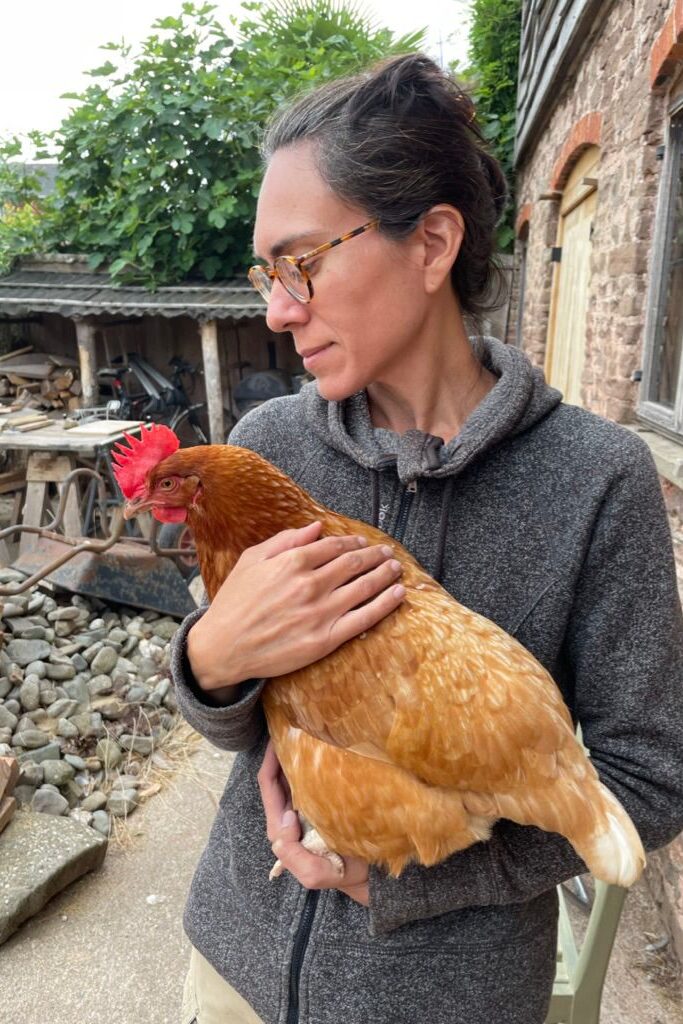
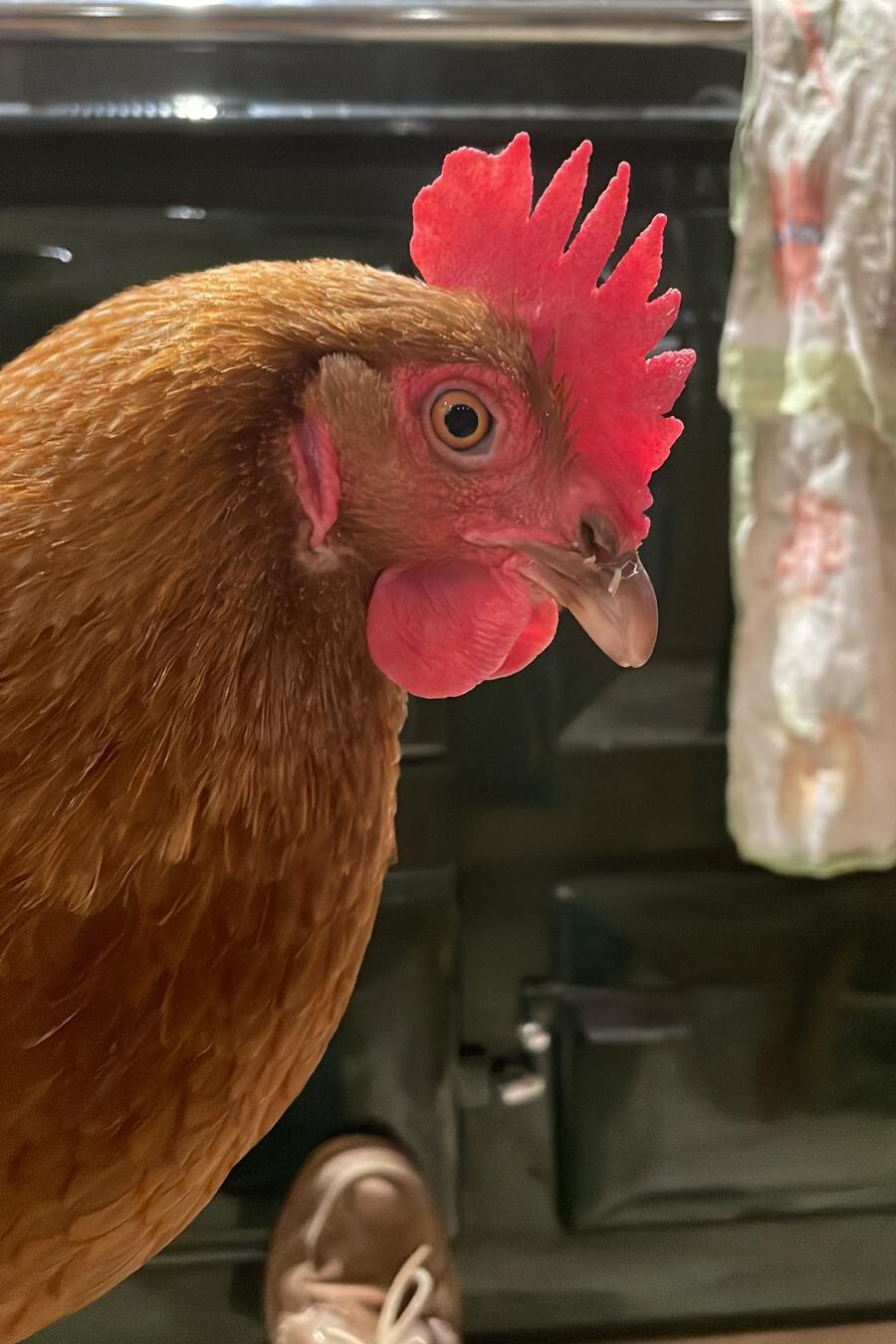
Well, I love birds and would have probably enjoyed being an ornithologist or specialized avian vet. We currently have six ex-battery hens at home, and they are lovely company and little feathered enthusiasts. They lay eggs for us and the neighbours, and are always excited to run around and scratch up the garden. One of the things I have greatly enjoyed is being able to observe birds in all the places I have travelled for work. I recently saw road runners and a quail family in Arizona and for me it is a thrill.
Any upcoming projects that you’re especially excited about?
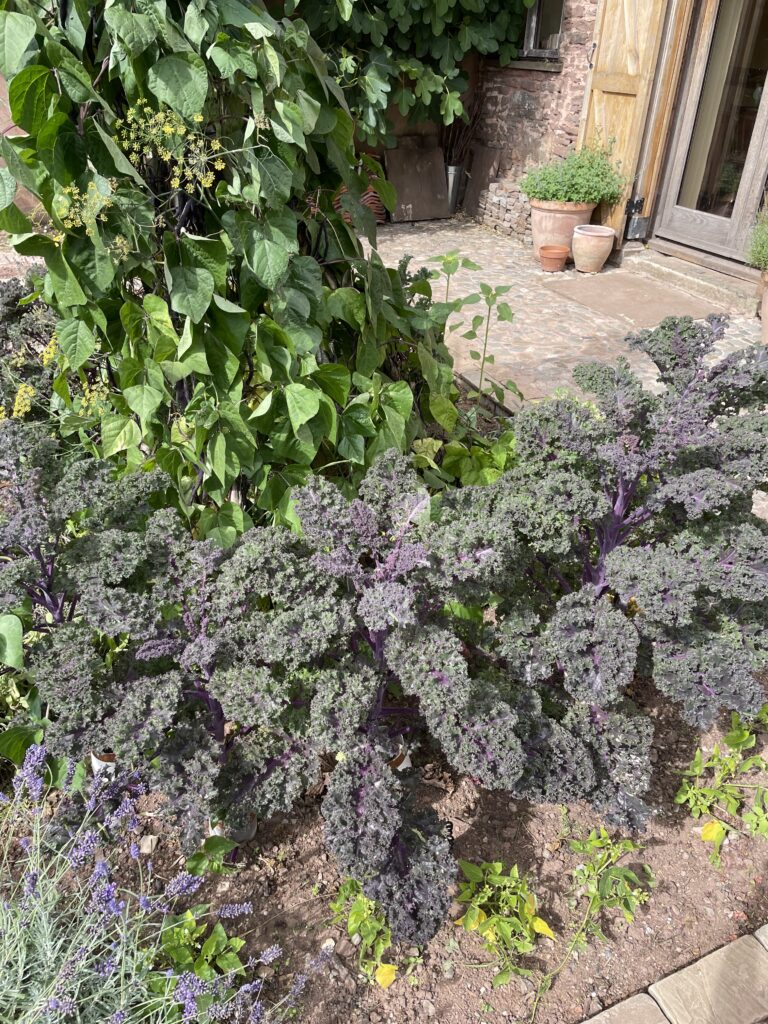
An ongoing project I’m looking forward to is adding some more garden beds this spring. We have four large beds and plan to put in two more. We’ll also plant fruit trees along a stone wall, where they will get a bit of help from the warm stone. Particularly in winter, it’s nice to think about what we might grow come spring. So far, we have done fairly well with a variety of herbs, cabbages, kale, chard, beans, courgettes, tomatoes, squash, corn, and figs. Our potatoes have been a disgrace—maybe they’ll be better this year!
Bach Brandenburgs!
Experience one of the most recognized and popular works in baroque music. Get your tickets to see Tafelmusik’s Bach Brandenburgs live in concert!
Jan 29 – Feb 1, 2026
Jeanne Lamon Hall, Trinity-St. Paul’s Centre
